I'm no chemist, so this may not apply here, but I've been looking at info on different batteries. I looked at Nickel/Iron because of their known long life. One change mention from original Edison design is adding a little Lithium oxide or dioxide ( forget exactly) to the electrolyte To extend the life of the Iron electrode.
There was also something about making plates (instead of just using sheets of iron) using iron powder with carbon (for conductivity) and something else which I forget that reduced the production of hydrogen.
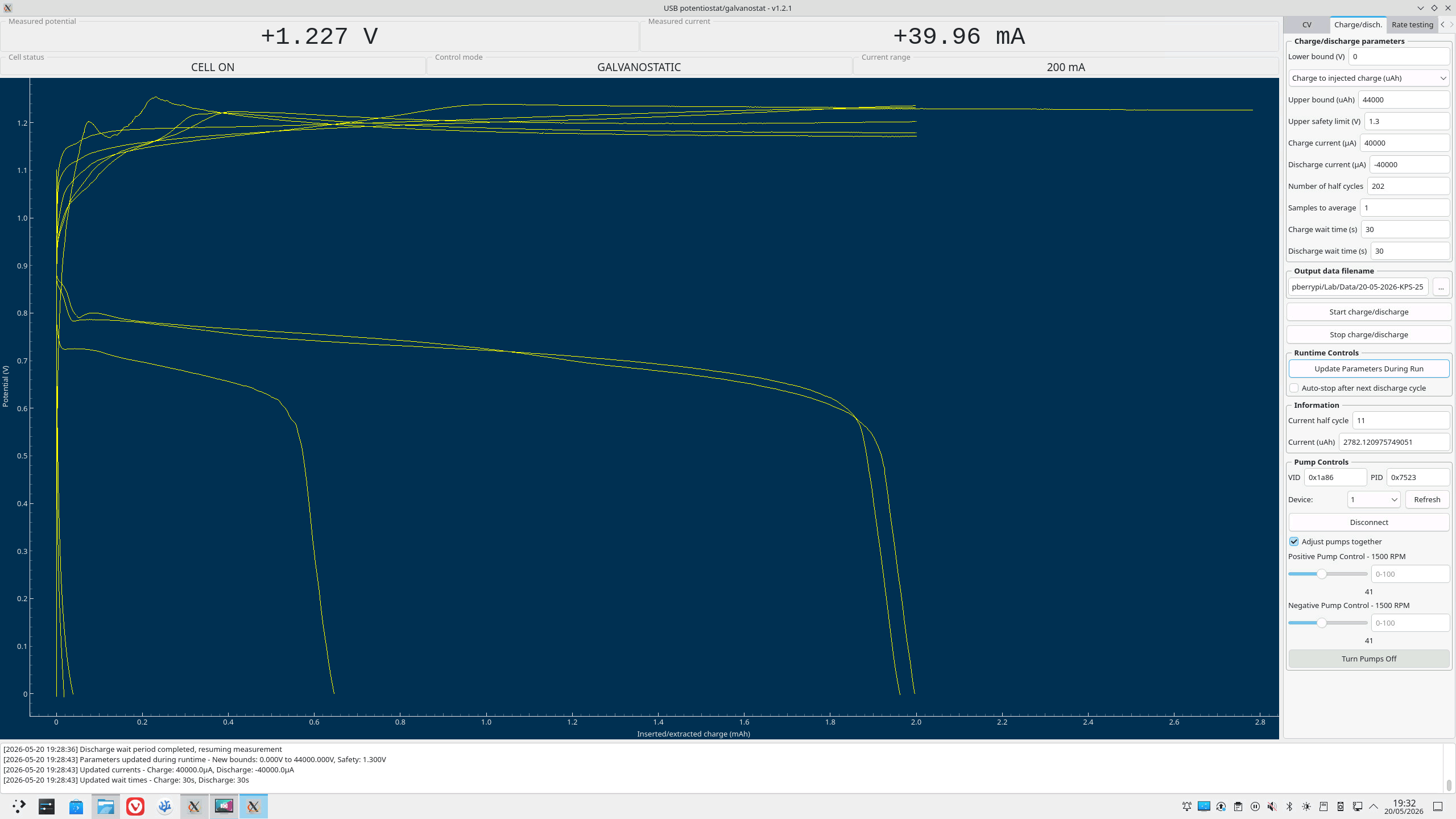
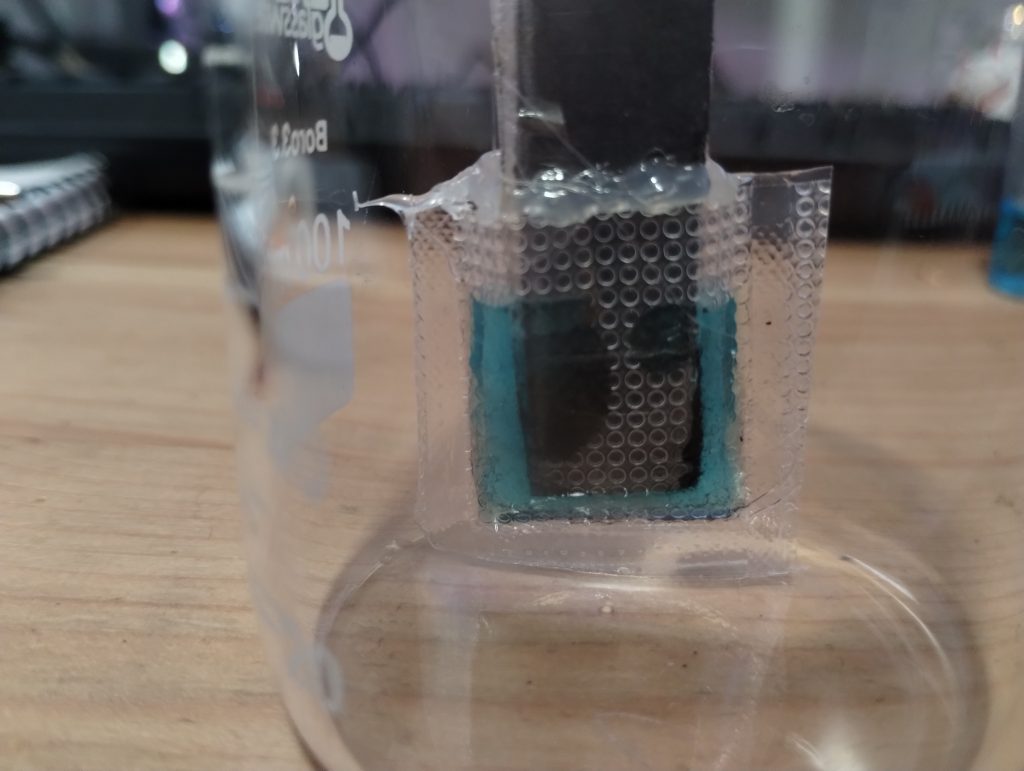
Edit: after original post, realized that one connection lead was loose, and the negative pump tubing was blocked/degraded---PTFE liner had detached from the wall and formed some sort of blob inside the tubing, it seems.
@idlestate also, some studies of these systems I think point to complexes being formed in solution, that contain both chloride and iodide/iodine, like ICl-, for example. They might show up with some spectroscopic techniques like Raman? So chloride can play more of a role than just supporting electrolyte.
@Methylzero "I heard you like batteries, so I got you a battery for your battery..." Definitely it's backing up a headless Raspberry Pi, a potentiostat, Arduino, and two peristaltic pumps.
@trevorflowers thanks for the kind words, and please feel free to ask questions about things you don't understand! I'm writing these lab notebook entries in a concise way and not doing much explaining
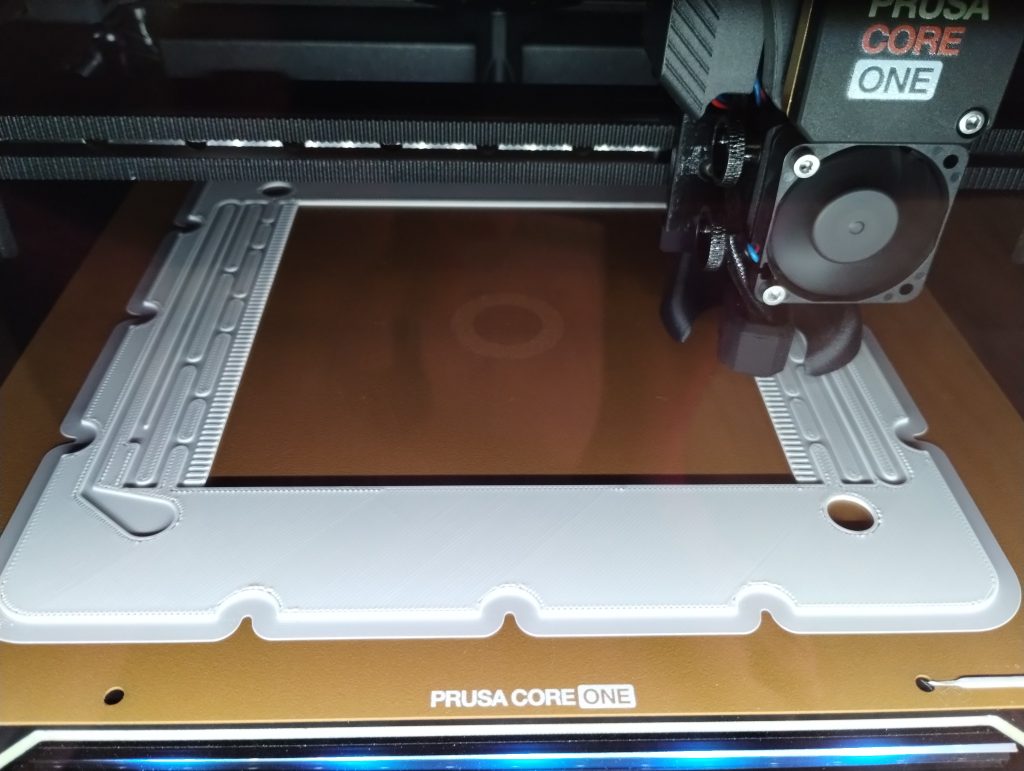
I'm no expert ether. We used quick setting plaster a lot in construction for repairs on a lot of things and now they have a "wood epoxy" which is an epoxy for wood repairs. You have a thing epoxy you brush on onto wood which provides a good bonding surface for dry rotted wood and then you mix an epoxy that works more like the quick setting plaster and creates a strong enough repair that you can nail it. These plasters and epoxies could be formed or poured to create a nice mold. For the quickset we could build up an area, then carve and shape it before it fully set. The surface is very smooth and with a spray sealer of some kind should be even better for molds.
A quick look into casting, it looks like the most common is using silicon for making the mold. Yes it lets you do detail, but it is also soft and flexible. Not good for making thin plates without warpage.